
Bhutan Travel Guide: A Private, Luxury Wellness Journey
The descent into Paro is unlike any other landing in the world. The plane banks between forested ridgelines close enough to touch, drops into a valley barely wide enough to hold it, and sets down on a runway that only a handful of specially certified pilots are trained to approach. I pressed my forehead to the window and watched terraced rice fields and whitewashed farmhouses rise up to meet us, and before the wheels had even touched down, I understood that Bhutan travel was going to ask something different of me than any destination I had visited before.
What followed was eleven days spent moving privately through the kingdom, from ceremonial welcomes at a wellness sanctuary in Paro to a demanding, unforgettable climb to Tiger's Nest Monastery, with luxury lodges, sacred dzongs, and some of the most memorable meals of my life woven in between. This is my account of that journey, written as the travel guide I wish I had read before I went, covering how to get there, where to stay, what to eat, which experiences are worth the effort, and everything you need to know about visas and the country's Sustainable Development Fee before you plan a private tour of your own.
If any part of this stirs the same pull it did in me, I would love to help you design your own version of it. Book a consultation whenever you are ready, and consider the rest of this guide your starting point.
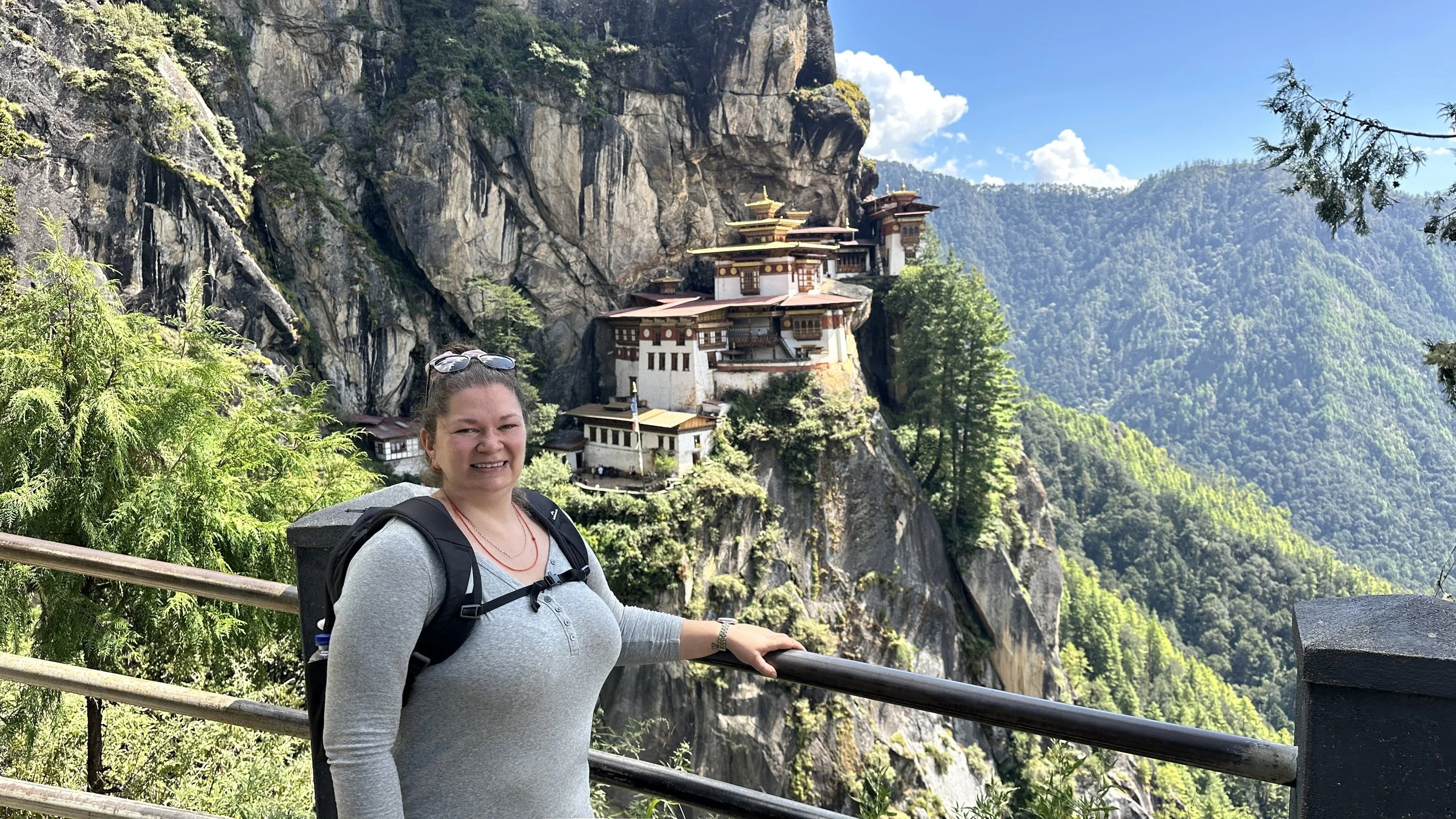
Me on my trek to the iconic Tiger’s Nest in Bhutan
Getting to Bhutan
Bhutan is not a destination you simply book a flight to and go. Only two airlines fly into the kingdom, Druk Air and Bhutan Airlines, and both operate out of a small handful of gateway cities across Asia, including Bangkok, Kathmandu, Delhi, Singapore, and a few others depending on the season. I flew Druk Air from Bangkok into Paro, and at the end of my trip, flew onward from Paro to Kathmandu on the same carrier before continuing home. This is a common routing for North American travellers, since it lets you pair Bhutan with a stop in Thailand or Nepal on either end of the journey, and I would recommend building in at least one or two nights in your gateway city so that jet lag and Bhutan's limited flight schedule do not collide with your itinerary.
Paro International Airport is Bhutan's only international airport, and it is worth saying plainly that the flight itself is part of the experience. On a clear day, the approach offers views of some of the highest peaks in the Himalayas. Which peaks you see depends entirely on your routing, with Kanchenjunga visible on approaches from Bangkok, Singapore, and Kolkata, and Everest more often glimpsed on the Delhi and Kathmandu routes. The airport sits at an elevation where the runway length and surrounding terrain require pilots to complete specialized training before they are certified to land there, and only a limited number of pilots worldwide hold that certification. None of this should concern you as a passenger. It simply means your first and last moments in Bhutan are memorable before you have even left the aircraft.
Because flight schedules are limited and subject to weather delays, particularly during monsoon season, I would encourage anyone planning Bhutan travel to build a buffer day into their itinerary on either end, rather than booking a tight connection immediately before or after your Bhutan flights.
The Case for a Private Tour in Bhutan
Every visitor to Bhutan, regardless of how they choose to travel, must book through a licensed tour operator and be accompanied by a guide for the length of their stay. This is a government requirement, not a matter of preference, and it shapes every trip to the kingdom in one way or another. Within that framework, travellers generally choose between joining a small group tour, which moves a set number of guests along a fixed itinerary at a fixed pace, or arranging a fully private tour, where the itinerary, pacing, and accommodations are built entirely around one traveller or one travelling party.
I chose the private route, and having now experienced it firsthand, I can say with confidence that it is the difference between visiting Bhutan and truly inhabiting it for a short while. My guide, Dorje, and my driver, Tenzin, were with me for the full eleven days, and the freedom that came with that arrangement changed the entire texture of the trip. When I wanted to linger at a monastery longer than planned, we lingered. When a hike left me more tired than expected, the following day's pace softened without a second thought. Dorje tailored explanations to what genuinely interested me rather than delivering the same script to a bus of twenty people, and by the end of the journey he felt less like a guide and more like a trusted friend showing me his country.
Group touring remains a perfectly reasonable way to see Bhutan, particularly for travellers working within a tighter budget, and it can offer its own camaraderie among fellow guests. But for anyone considering a wellness focused trip, or anyone who simply prefers a slower, more personal pace, a private tour in Bhutan is worth the additional investment. It is, quite honestly, the only way I would choose to return.
It is worth explaining how this actually works, because the licensed operator requirement confuses many travellers. Your ground handling in Bhutan is managed by a licensed local operator, but that is not the same as planning your journey. My role is to design the itinerary, select the properties, and shape the pacing and experiences around who you are and how you like to travel, then work directly with a vetted ground partner to execute it flawlessly on the ground. For Bhutan and much of Asia, I work with Trails of Indochina, one of my preferred ground operators in the region, whose local guides and logistical support are the reason a trip like mine unfolds without a single friction point. You do not need to source or vet an operator yourself, and in most cases you could not book with them directly regardless. That coordination is precisely what I handle. Start the conversation here and I will take it from there.
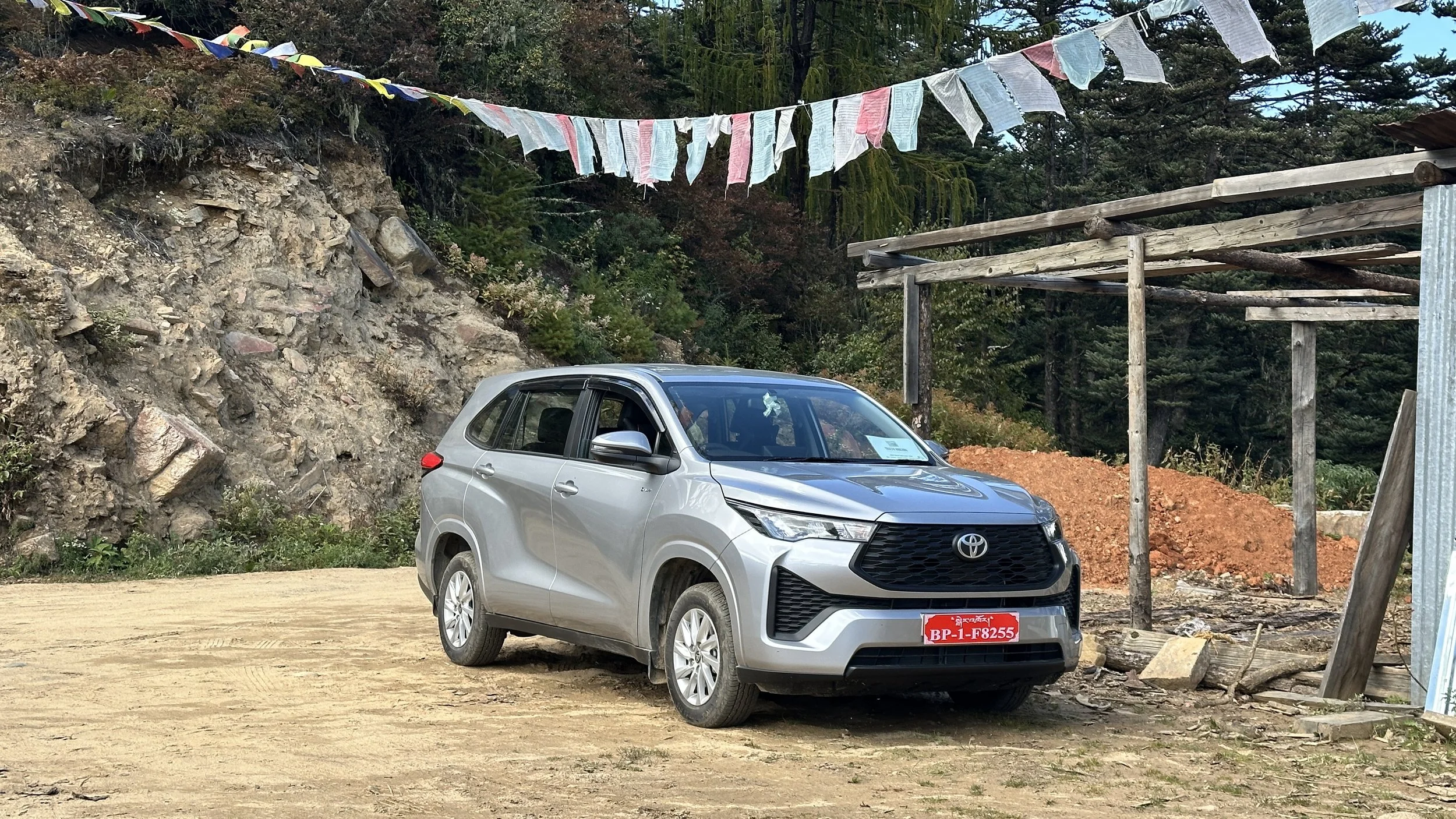
My vehicle for the duration of my private tour here in Bhutan
Where to Stay: Bhutan's Finest Wellness and Luxury Properties
Accommodation in Bhutan operates on a tiered system set by the government, ranging from standard three star properties to a small collection of ultra luxury lodges and resorts that rival anything you would find in the Maldives or the Swiss Alps. Across eleven days, I stayed at five distinctly different properties, and each one taught me something new about how Bhutanese hospitality translates luxury without losing its sense of place.
Bhutan Spirit Sanctuary, tucked into the quiet Neyphu Valley just fifteen minutes from Paro's airport, anchored both the beginning and end of my journey. This is Bhutan's most fully realized wellness resort, built around an all inclusive program that includes a consultation with a traditional Bhutanese medicine doctor, a personalized wellness plan, daily treatments ranging from hot oil compressions to Ku Nye massage, guided herbal walks, and yoga and meditation sessions, all folded into the nightly rate alongside full board dining. Cultural activities are included as well, from pottery classes to traditional Bhutanese sports, and it was here that I took a cooking class with one of the resort chefs and learned to fold momos, which turned out to be one of the experiences I have thought about most since coming home. My arrival began with a Buddhist transformation ritual before I even checked into my room, and the property's indoor heated infinity pool, sauna, and well stocked library made it easy to understand why so many guests choose to bookend their entire Bhutan itinerary here.
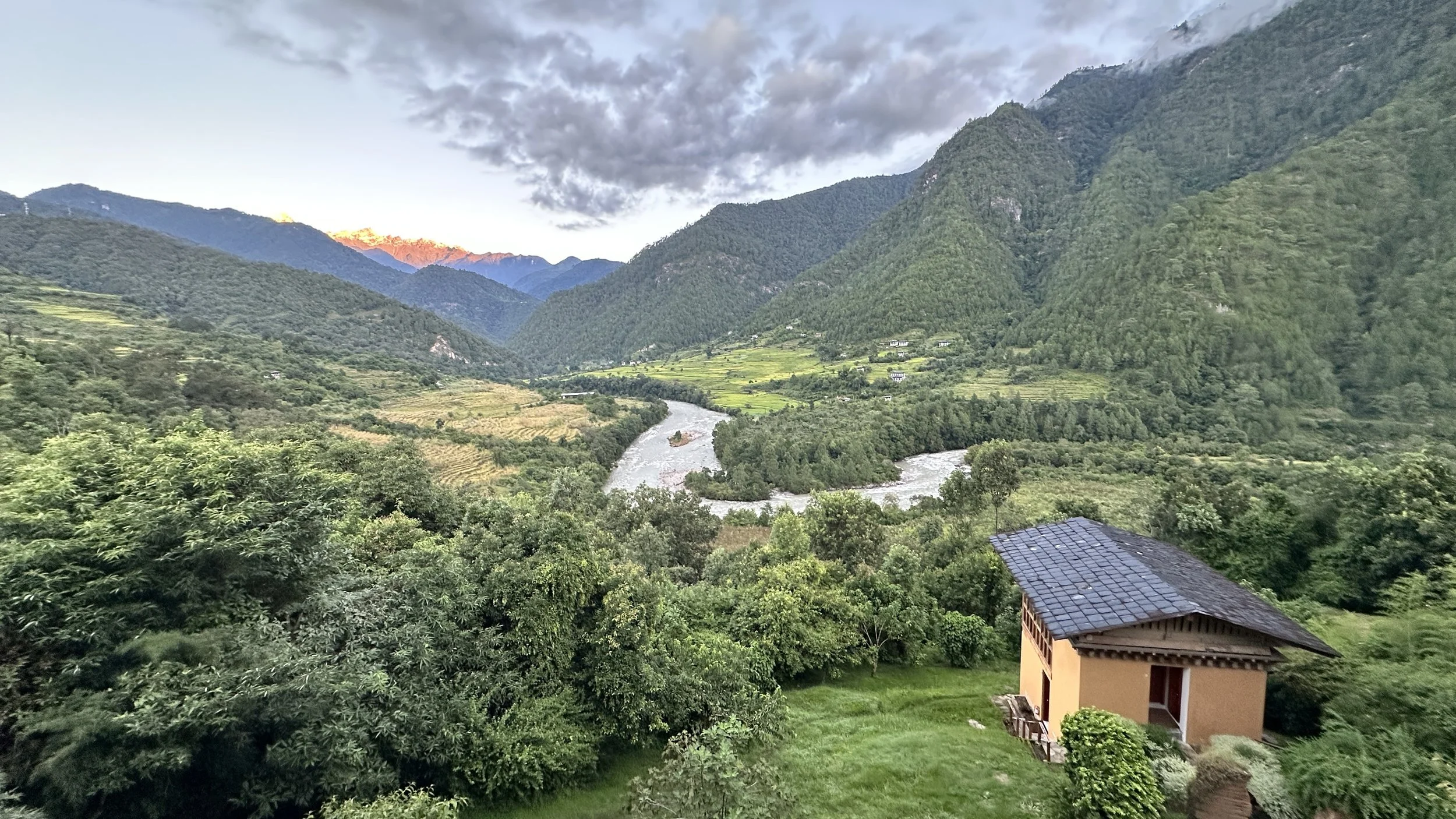
Views of the valley from my suite at Como Uma Punakha
In Punakha, I moved through three very different properties over the course of several nights. Como Uma Punakha offered a contemporary, minimalist counterpoint to the more traditional lodges elsewhere on the trip, with clean architectural lines and floor to ceiling windows that framed the Mo Chu river and the rice terraces below. Six Senses Punakha, by contrast, delivered the brand's signature understated luxury translated thoughtfully into a Bhutanese setting, with a Lodge Suite that felt like a private retreat complete with a stocked minibar and daily laundry service. The defining feature here, however, is the infinity pool, which appears to spill directly into the valley below with the mountains rising beyond it. I spent far longer in that water than I had planned, and it remains one of the most photographed and most deserved highlights of any Punakha stay. The spa is not included in the rate, but it is an addition I would recommend without hesitation. My treatment opened with an intention ceremony, a quiet, deliberate ritual that asks you to set a purpose for the hour ahead, and it transformed what could have been a very good massage into something closer to a meditation.
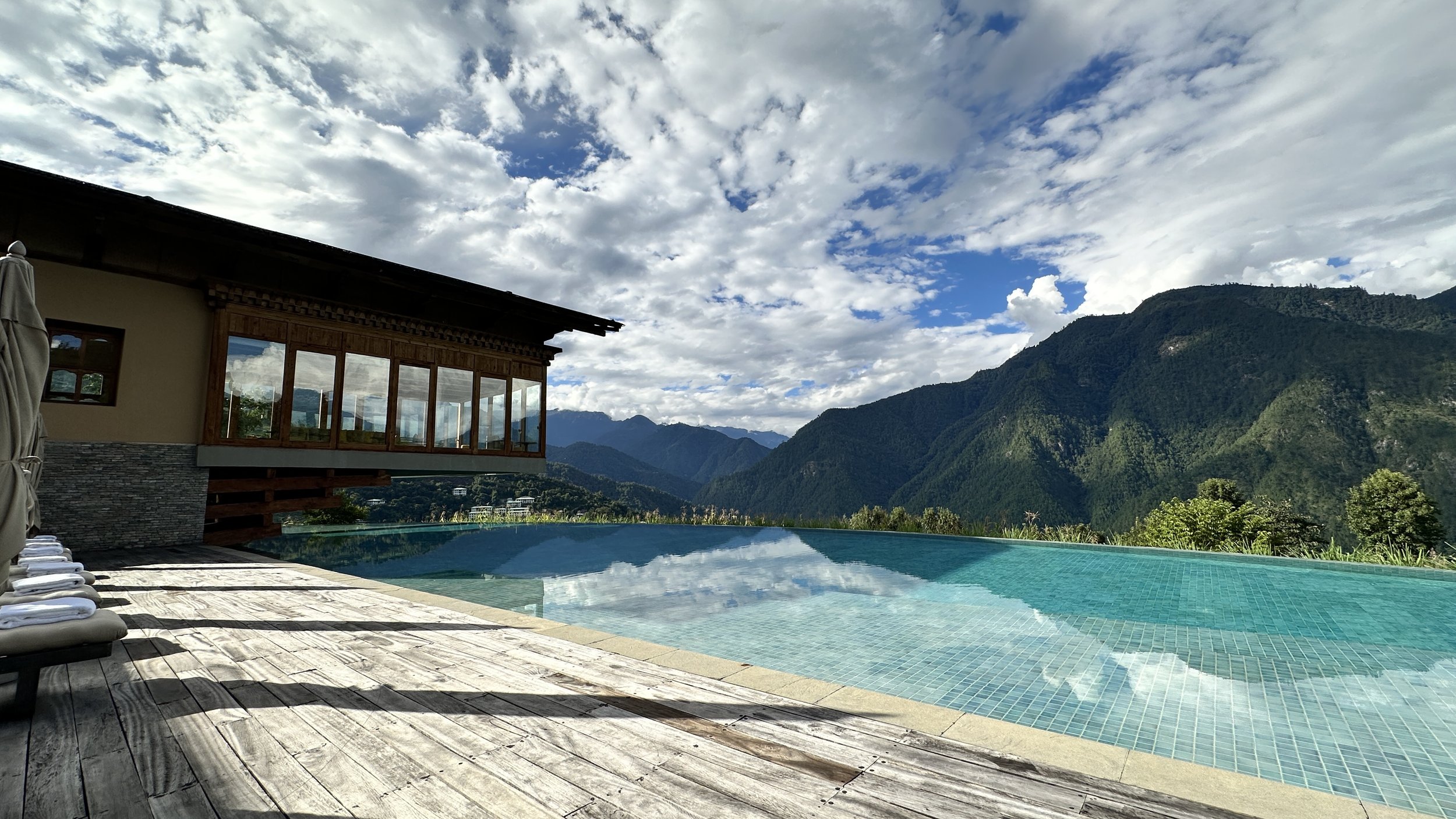
The “Flying Farmhouse” over the infinity pool at Six Senses Punakha
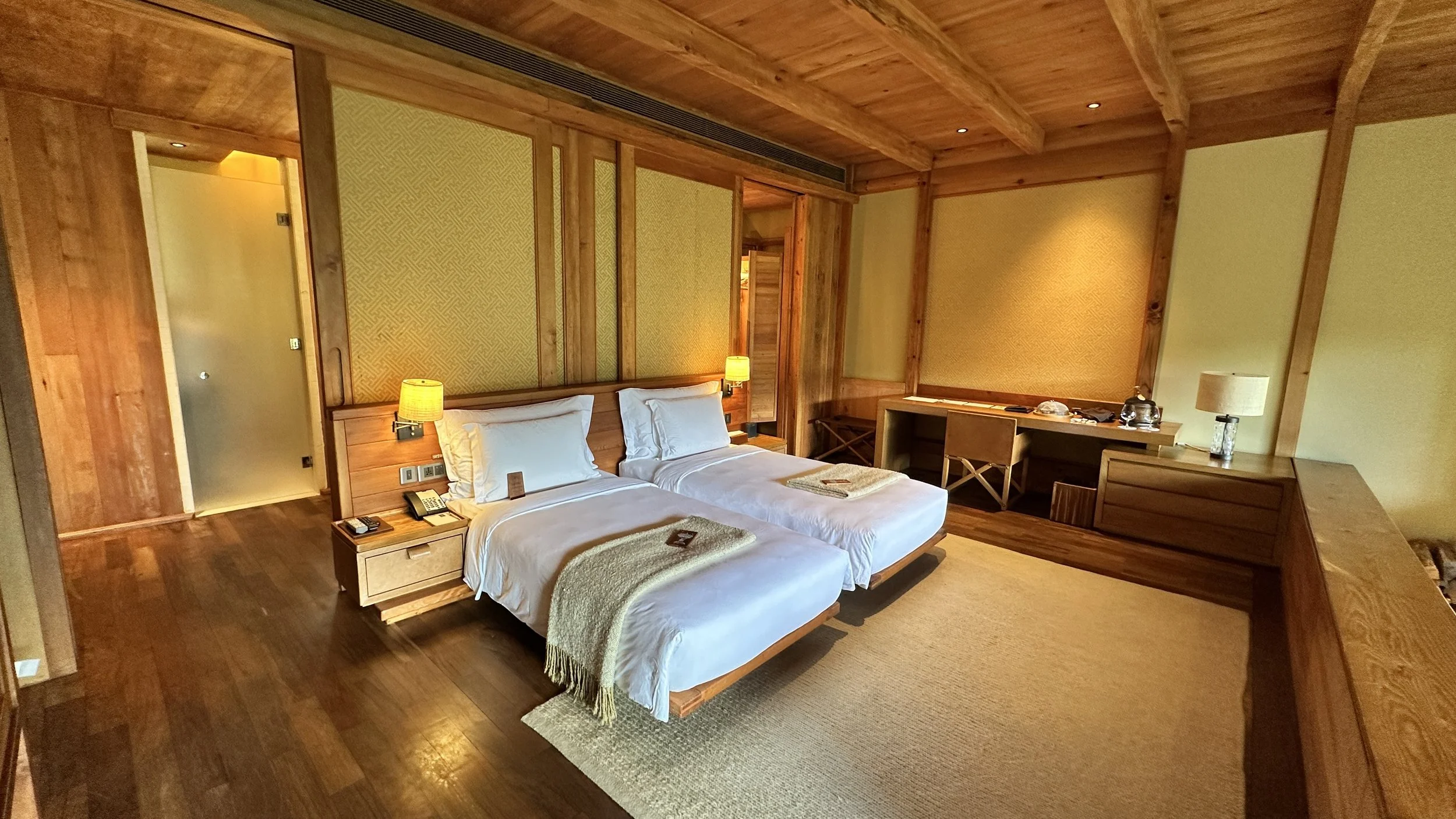
My spacious suite at the Six Senses Punakha
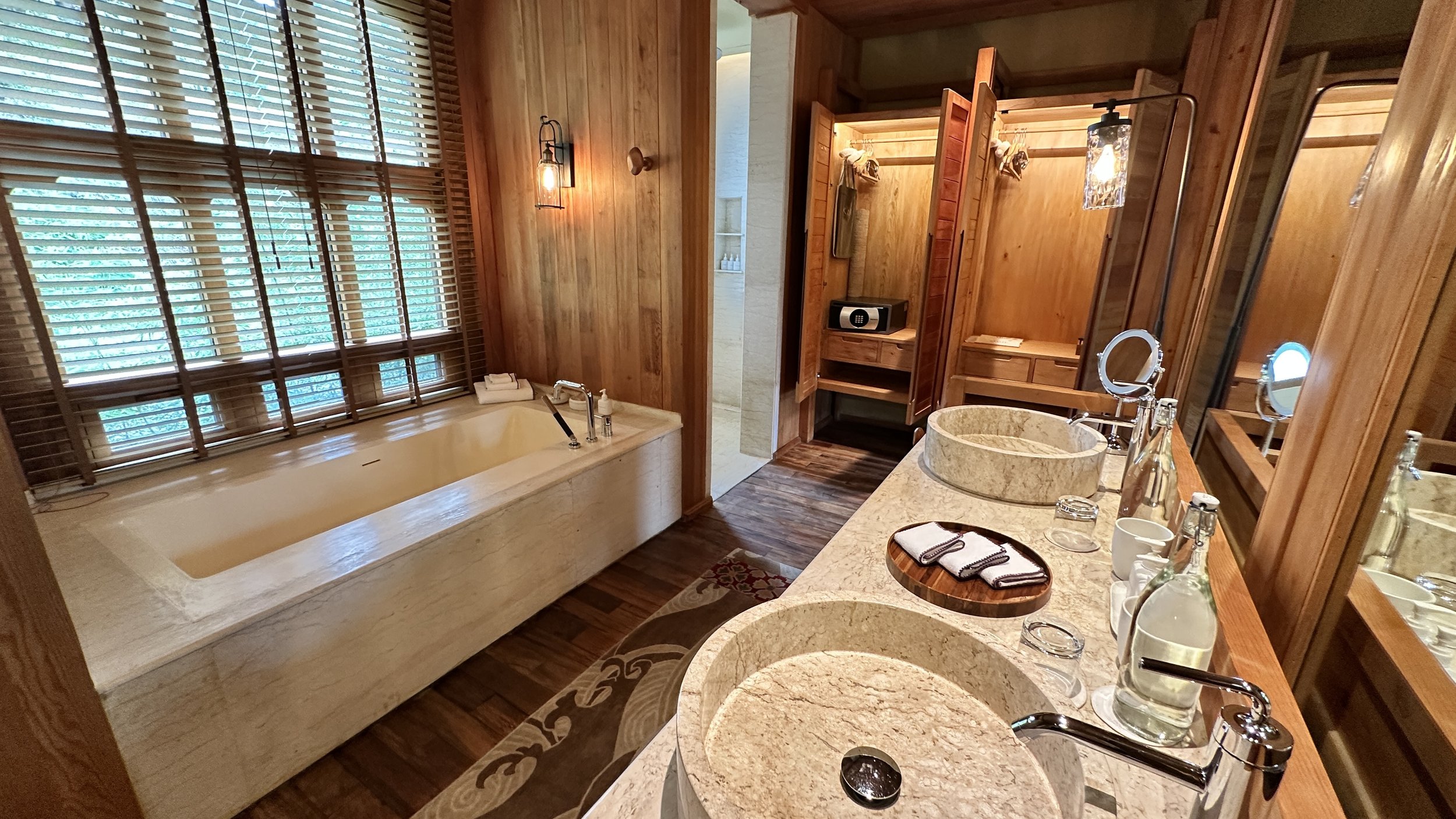
Bathroom in my suite at Six Senses Punakha
Pemako Punakha closed out this leg of the journey and proved to be one of the most distinctive properties I have stayed in anywhere in the world. The tented villas were designed by Bill Bensley, the celebrated hotel designer behind some of Asia's most theatrical and imaginative properties, and his signature is evident in every detail, from the layered textiles and antiques to the sheer sense of drama in the spaces. Each villa comes with its own private pool, and depending on which you are assigned, your outlook may be over the Mo Chu or into the surrounding forest, both of which offer complete seclusion. If a river view matters to you, it is worth requesting at the time of booking. The combination of Bensley's design sensibility and that setting produced some of the most restorative sleep of the entire trip.
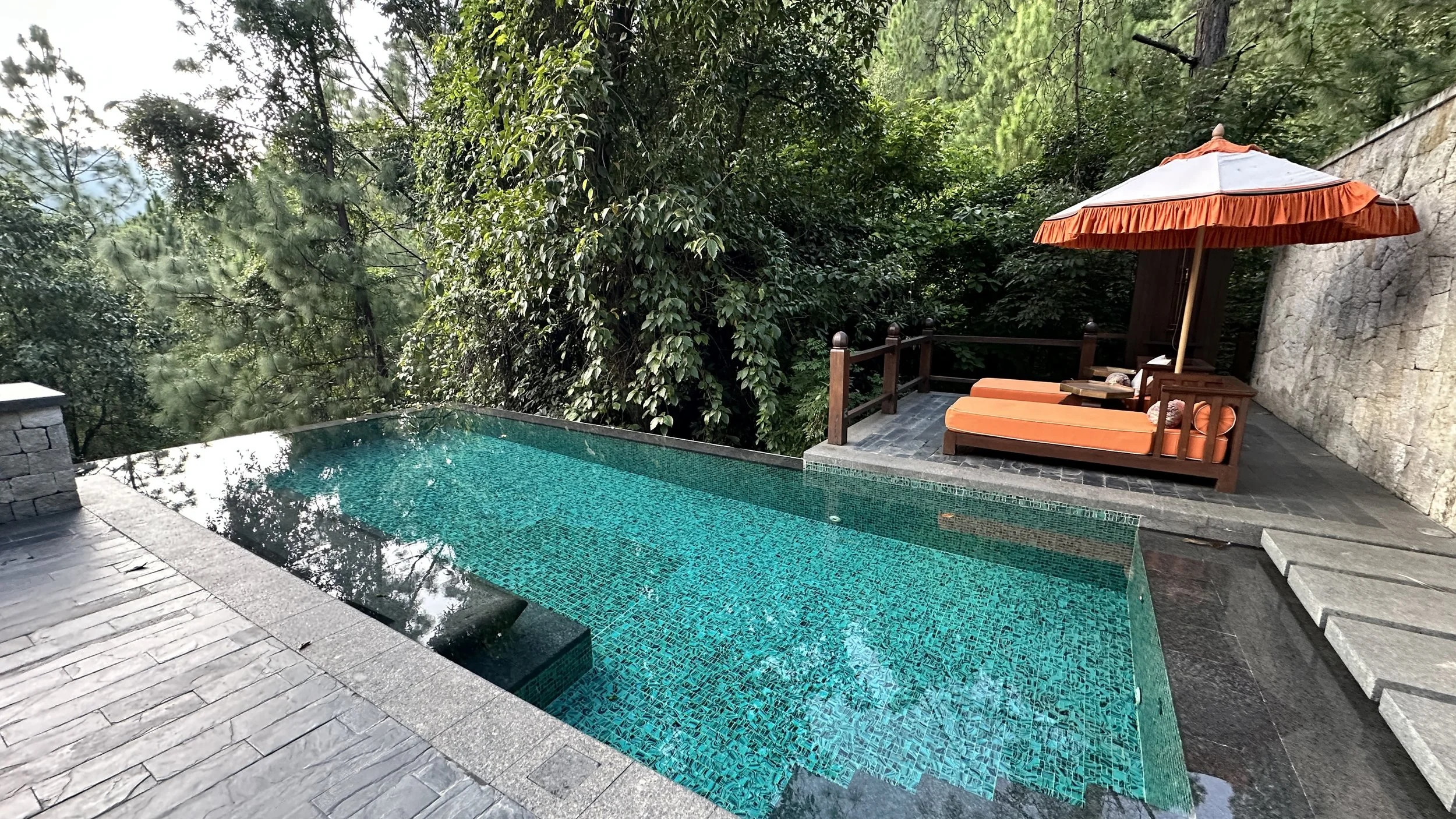
My private pool at Pemako Punakha
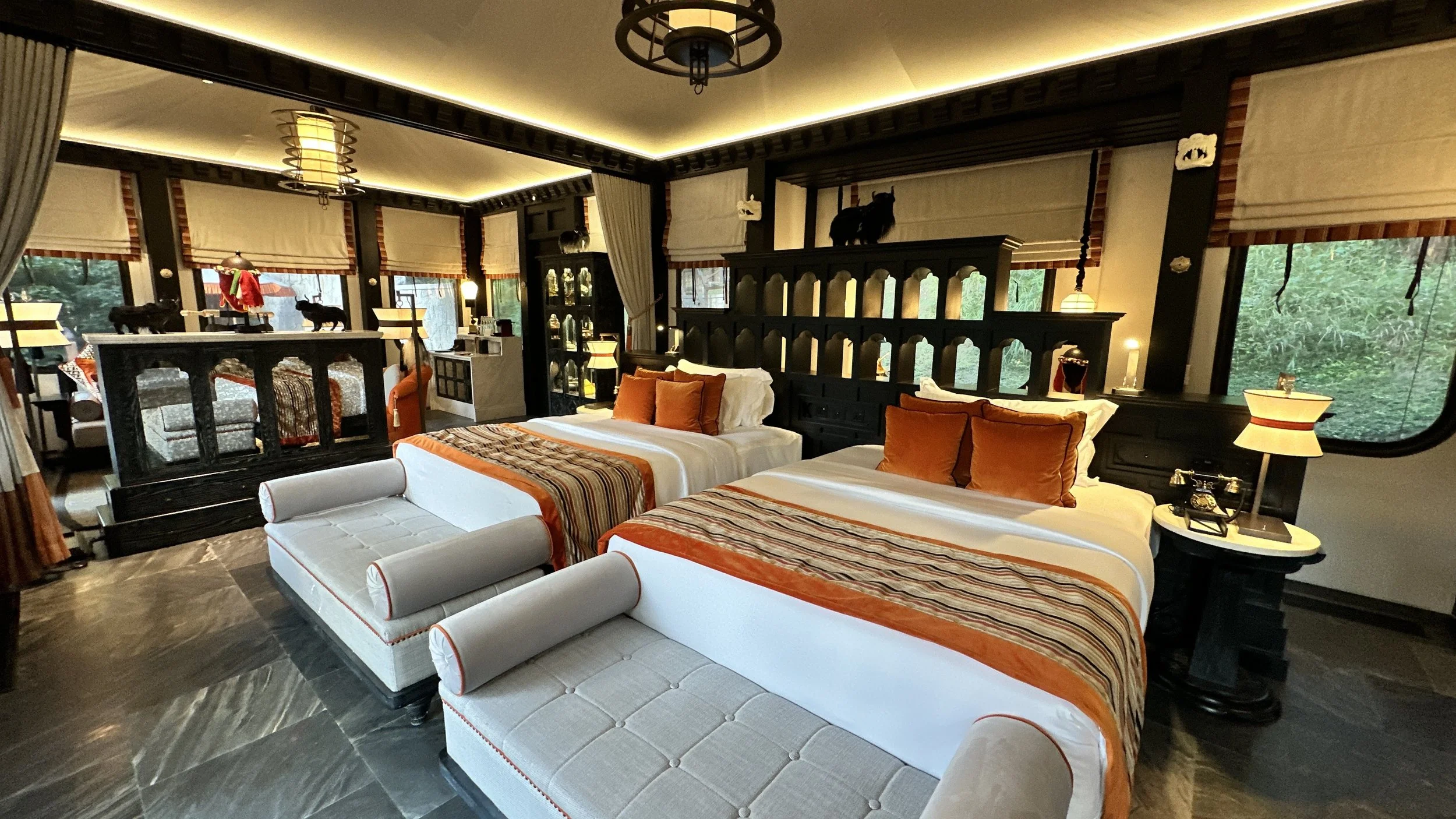
Inside my tented villa at Pemako Punakha
In Gangtey Valley, Gangtey Lodge is perched high above the valley floor with uninterrupted views across to the seventeenth century Gangtey Monastery and the farmhouses scattered below. The design leans rustic and warm, built from local materials in a style that echoes traditional Bhutanese farmhouses, with wood burning stoves and handwoven textiles throughout. Rates here include full board, beverages, laundry, and a genuine range of cultural and outdoor activities, from archery, Bhutan's national sport, to mountain bikes available to borrow and guided walks straight from the lodge door. Trying my hand at archery alongside staff who had grown up with a bow was equal parts humbling and genuinely fun, and it remains one of my favourite memories from the valley. The spa is a separate charge, though I would encourage you to build it into your budget regardless. I took my massage in my own suite, in front of the fire with the valley stretching out beyond the windows, and it remains one of the most quietly indulgent hours of the entire journey.
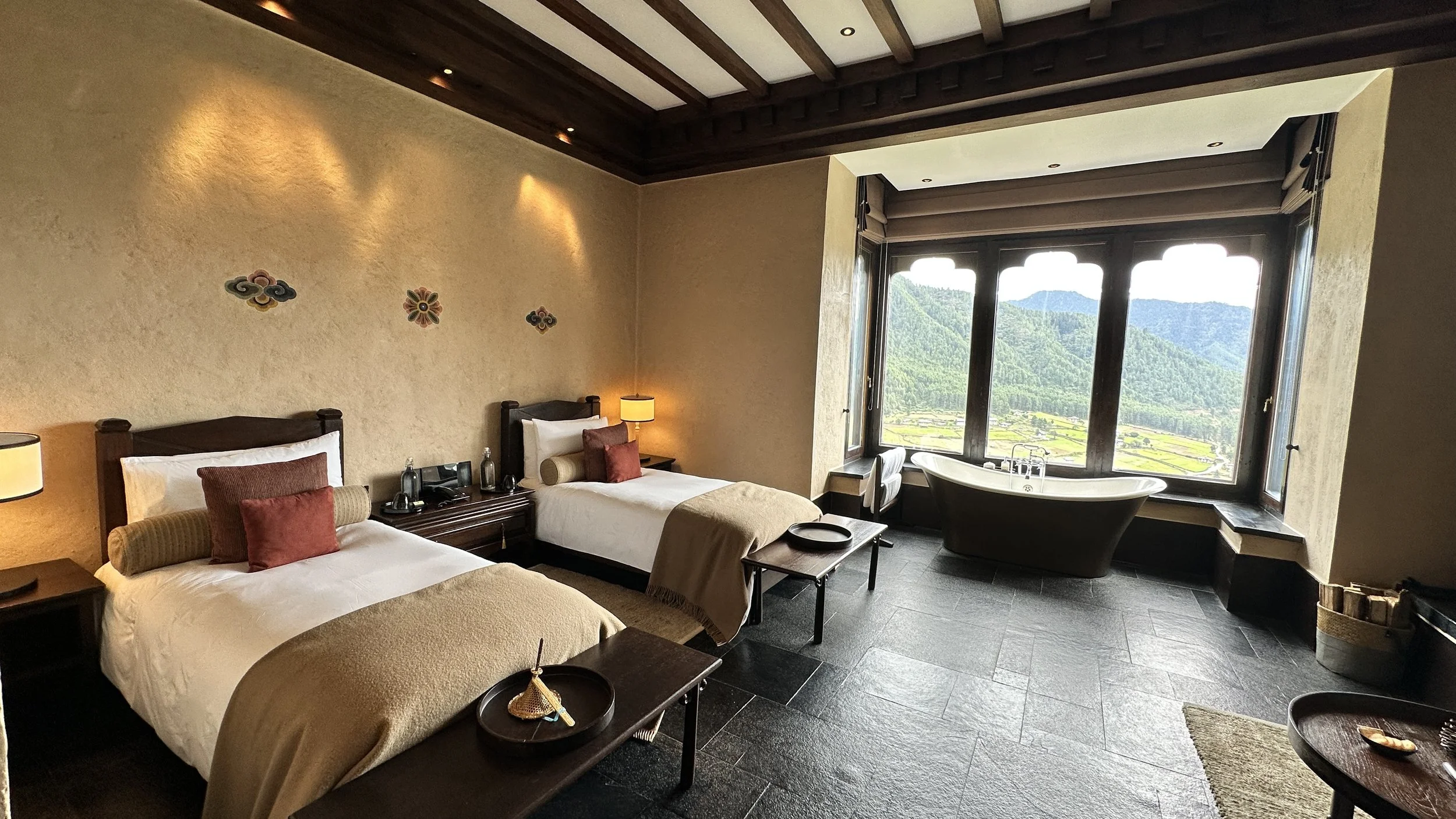
Inside my suite at Gangtey Lodge
Taken together, these five properties illustrate just how varied luxury accommodation in Bhutan has become over the past decade, from contemporary minimalism to deeply traditional design, and from all inclusive wellness immersion to intimate, tented seclusion. Choosing well matters here more than in most destinations, because these lodges are small, they book out early, and the difference between a suite with a valley outlook and one without can shape your entire stay. This is also where working with an advisor pays for itself, since many of these properties sit within programmes that allow me to secure added value for my clients, from upgrades to resort credits to experiences that are not otherwise offered. Reach out here and we can map out the right combination for your trip.
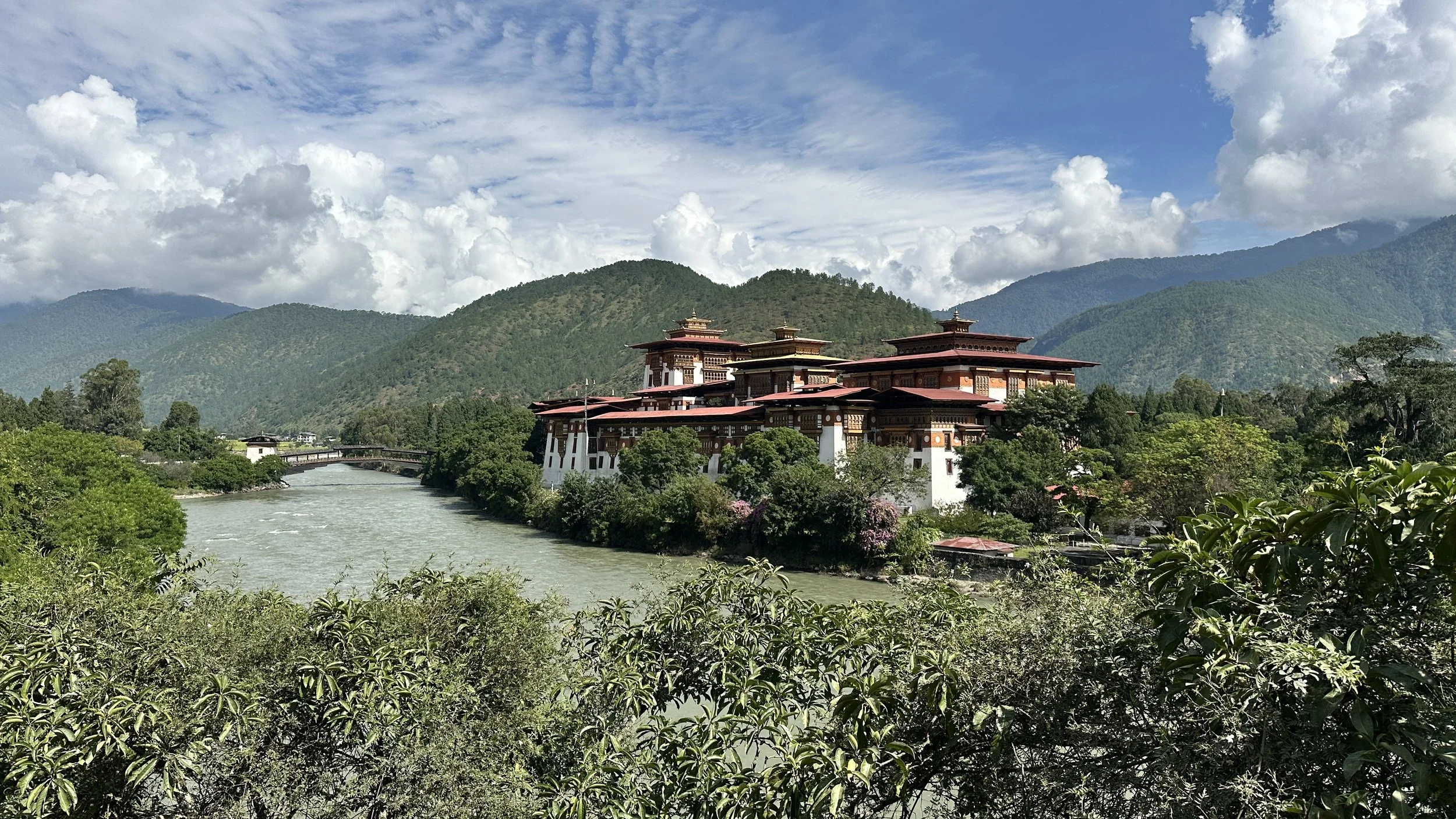
Punakha Dzong
Dining Across the Kingdom
Bhutanese cuisine rarely gets the attention it deserves outside the country's borders, and I found myself genuinely surprised by its depth and character. The national dish, ema datshi, pairs fiery green chilies with a local, slightly tangy cheese that melts into a rich, silky sauce, and it appears in one form or another at nearly every meal, whether at a farmhouse table or a five star dining room. I learned to make it myself during a hands on cooking class at Bhutan Spirit Sanctuary, where a resident chef also walked me through folding momos, the dumplings found throughout the Himalayan region but given their own distinct character here through the fillings and dipping sauces used.
Most of the luxury properties I stayed at operate on a full board basis, with breakfasts built around fresh, à la carte dishes and often a small wellness shot to start the day, followed by elaborate four to six course lunches and dinners that draw on Bhutanese, Indian, and Western influences depending on the property. Meals at Bhutan Spirit Sanctuary in particular are treated as an extension of the wellness program itself, with dishes adjusted to dietary preferences and both local alcohol and a full range of non alcoholic beverages included in the nightly rate.
Beyond the hotel dining rooms, some of my most memorable meals happened well outside a formal restaurant setting. Lunch with author Linda Leaming at Folk Heritage Restaurant in Thimphu introduced me to a traditional Bhutanese spread over unhurried conversation, and a cooking session at a rural farmhouse near Punakha, where I helped prepare lunch alongside the family who lived there, remains one of the most genuine cultural exchanges of the entire trip. A visit to Namgay Artisanal Brewery in Paro, a microbrewery established in 2016, added an unexpected but welcome layer, with a lineup of craft beers made using Bhutan's distinctive red rice that you simply cannot find anywhere else in the world.
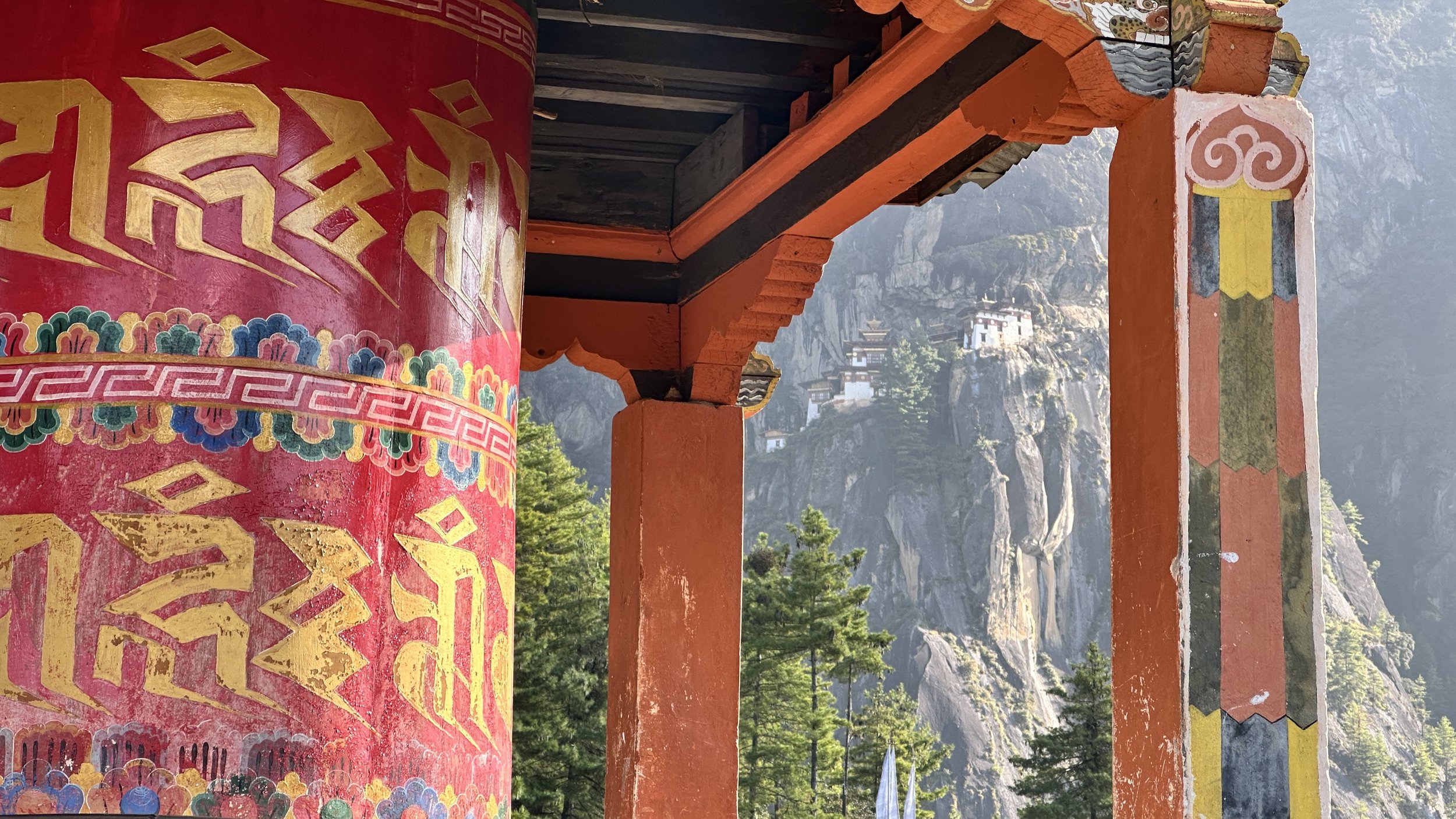
Trekking up to Tiger's Nest Monastery
Experiences Worth the Journey
Bhutan rewards travellers willing to be physically and culturally present, and several experiences stand out as essential to any well planned Bhutan itinerary. Chief among them is the hike to Tiger's Nest Monastery, known locally as Paro Taktsang, which clings to a cliff face 900 metres above the valley floor. Legend holds that Guru Rinpoche flew to this site on the back of a tigress and meditated in a cave here for three months, and the monastery built around that cave remains the most spiritually significant site in the country. The hike itself climbs roughly 550 metres over three kilometres of trail, and while it is demanding, particularly at altitude, nothing else on the trip matched the sense of accomplishment that came with reaching the monastery gates and having a monk bless a small clay offering I had made days earlier.
Equally memorable, though far less physically taxing, was an afternoon spent with Linda Leaming in Thimphu, an American writer who settled in Bhutan decades ago and offers visitors a genuinely rare, insider's view of the capital, from the bustling Farmer's Market to the Institute of Zorig Chusum, where students undertake a six year course in the country's thirteen traditional arts and crafts. A private blessing ceremony inside Punakha Dzong, one of the most beautiful fortresses in Bhutan, including the lighting of 108 butter lamps, offered a different kind of experience entirely, quiet and deeply moving in a way that is difficult to describe to anyone who has not stood inside a working dzong during an active ceremony.
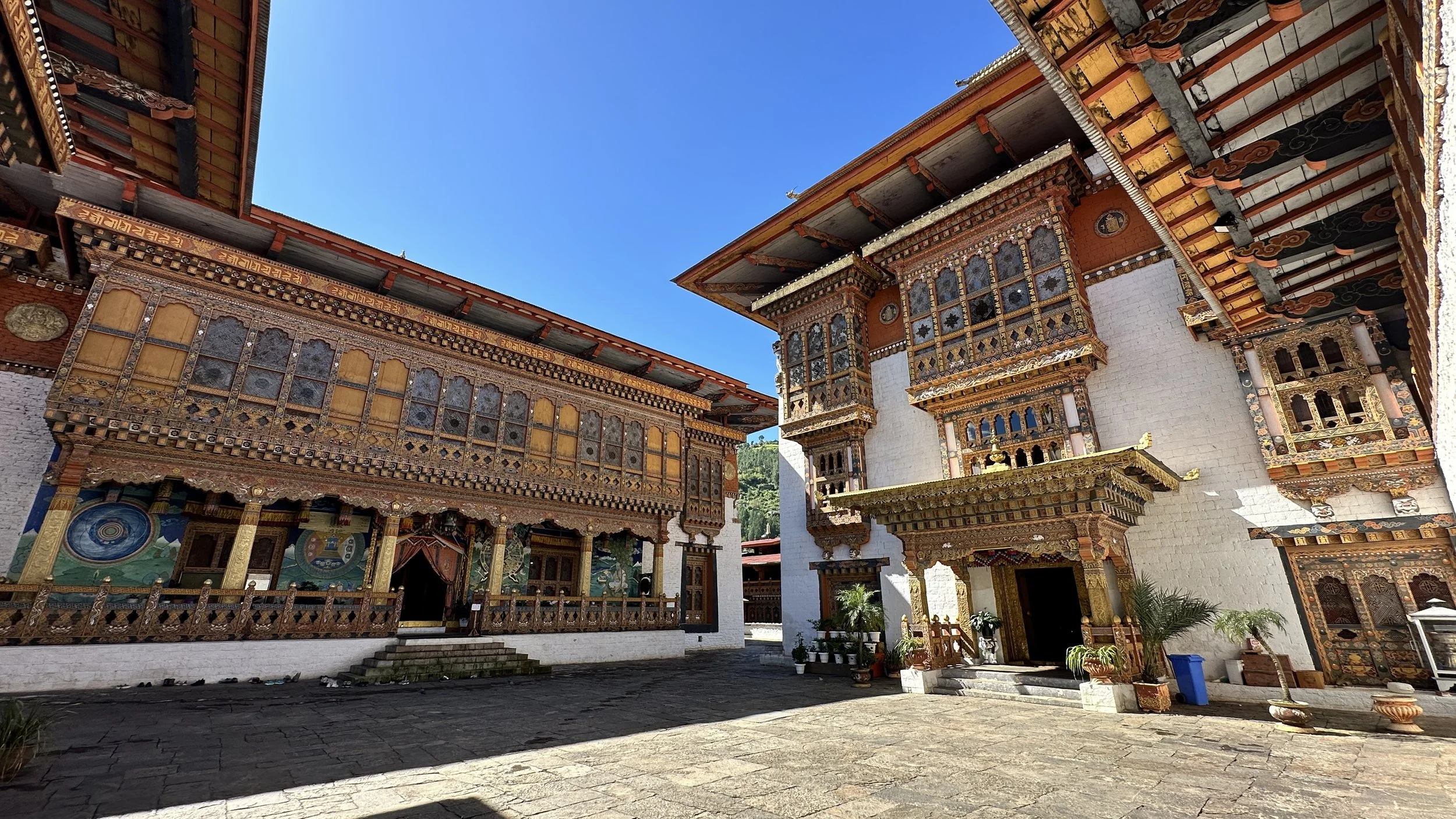
Punakha Dzong, where I experienced a private blessing ceremony inside one of the most beautiful and culturally significant fortresses in Bhutan.
For travellers drawn to the wellness side of Bhutan travel, the traditional hot stone bath deserves special mention. River stones are heated until glowing, then placed into a wooden tub filled with water and aromatic herbs, and the resulting soak eases muscle fatigue in a way that felt genuinely restorative after longer hiking days. A private evening session on Gross National Happiness, the development philosophy that has guided Bhutanese policy since the 1970s, added intellectual depth to the trip as well, offering real context for the balance between tradition and modernity visible everywhere in the country.
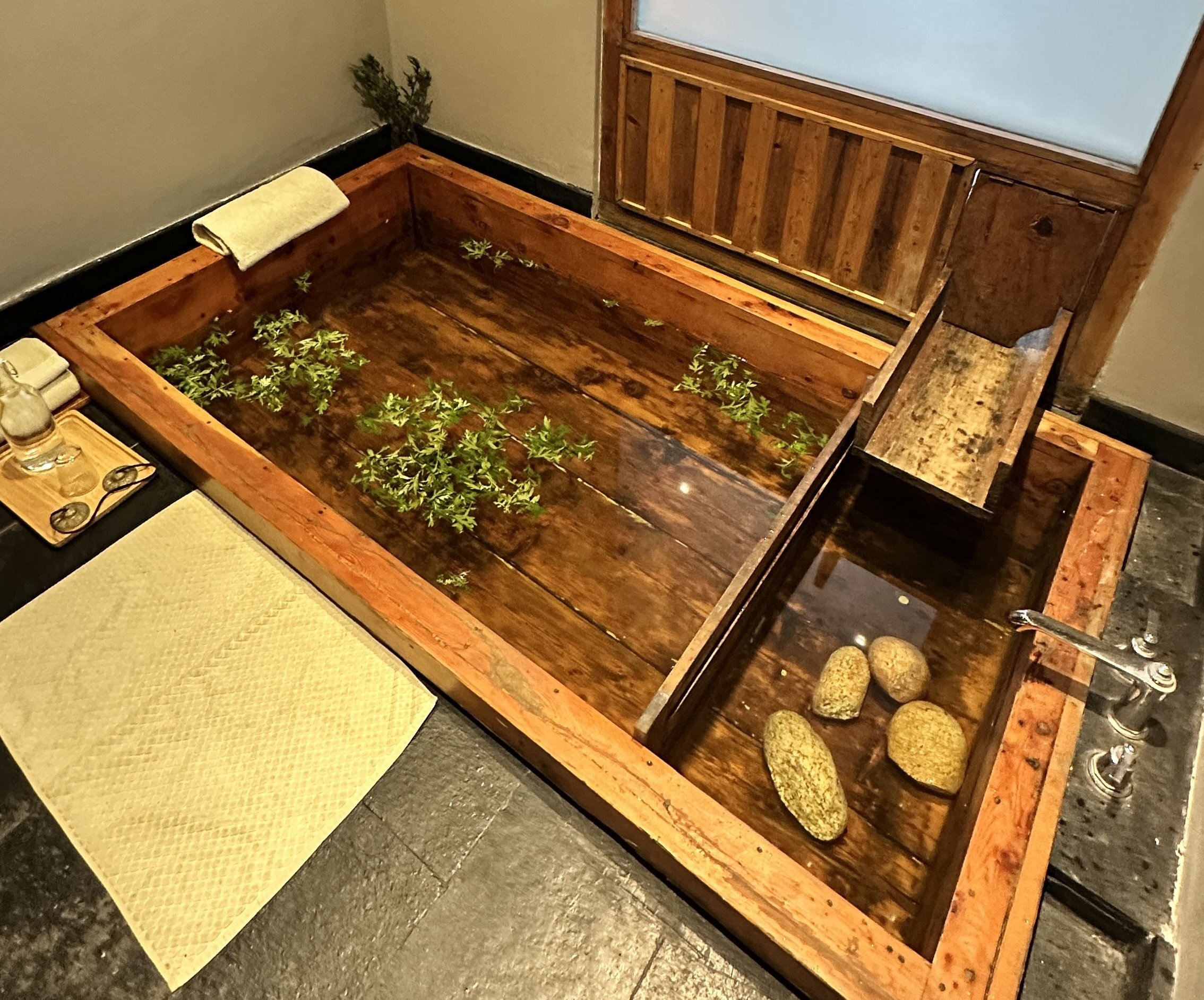
I experienced a traditional, hot stone bath at Bhutan Spirit Sanctuary
Finally, I would encourage any traveller to build in time for a hands on cultural experience, whether that is a cooking class, a traditional painting lesson, or an afternoon dressed in a kira for a performance of Bhutanese mask dances. These moments, more than any single landmark, are what stay with you long after the trip ends.
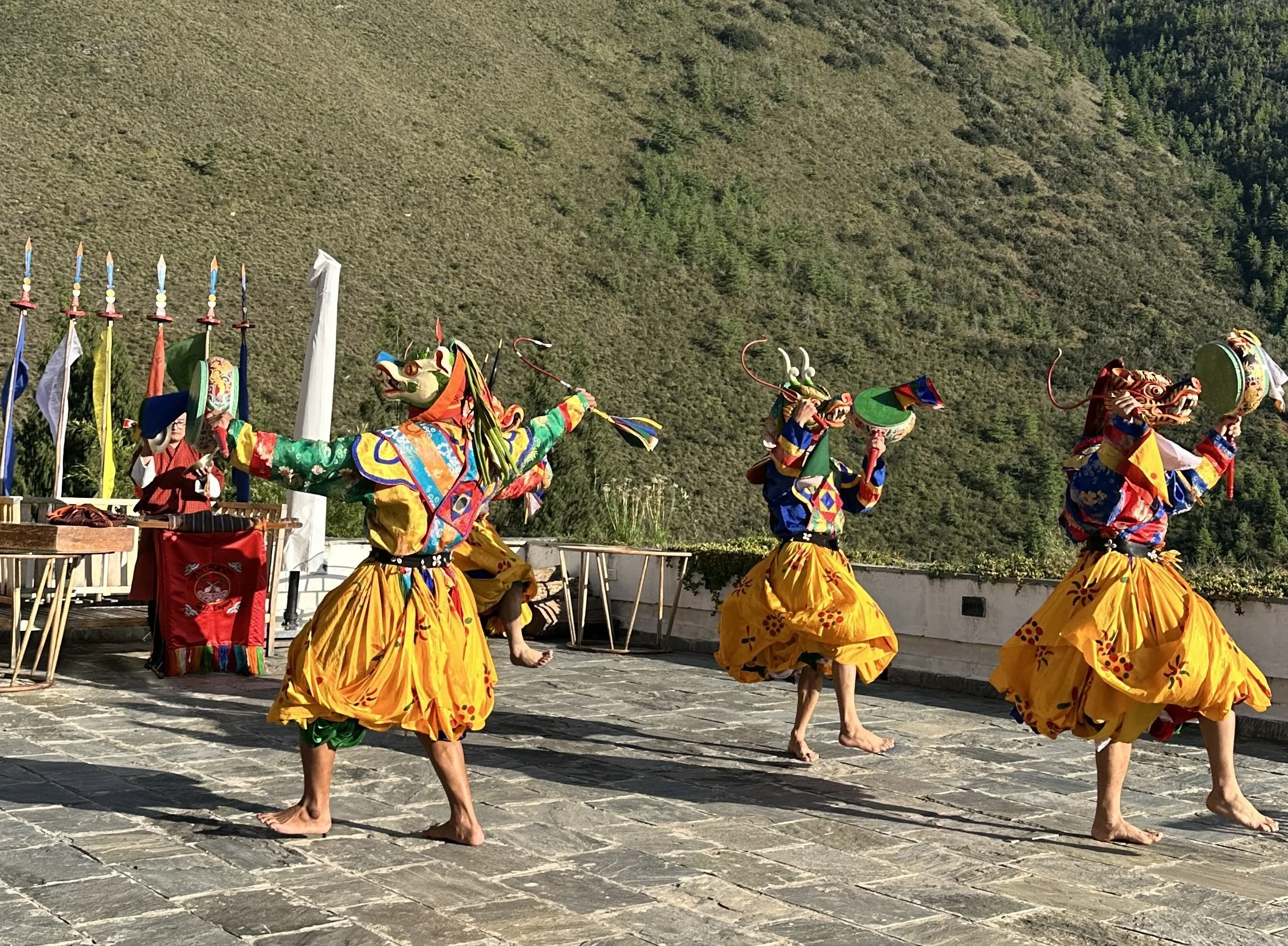
Bhutanese Cultural Dance Performance
Adventure Additions for a More Active Bhutan Itinerary
My own trip leaned heavily toward wellness and culture, but Bhutan rewards a far more active itinerary as well, and these are elements I regularly build into trips for clients who want more movement and adrenaline woven through their days. River rafting on the Mo Chu in Punakha is the most accessible option, a gentle to moderate half day run past Punakha Dzong that suits nearly any fitness level and pairs beautifully with a stay at one of the valley's riverside lodges. Travellers seeking something more technical can raft the Pho Chu instead, where faster water and a longer run offer a genuinely thrilling half day on the river.
Cycling has also become one of Bhutan's most rewarding ways to see the countryside, particularly the ride over Dochula Pass and down into the Punakha Valley, or the shorter, culturally rich route to Chimi Lhakhang known locally as the Madman Trail. For clients with more time and a serious appetite for trekking, multi day options range from the four day Druk Path Trek between Paro and Thimphu, which passes alpine lakes and ancient dzongs at elevation, to longer, more demanding routes like the Jomolhari Trek for experienced trekkers wanting a true high altitude expedition.
None of these require sacrificing the luxury or privacy of the trip I have described here. A raft, a bike, or a multi day trek can be layered into a private itinerary alongside the same wellness lodges and cultural experiences, and it is precisely this kind of tailoring, wellness one week, adventure the next, that makes a private tour in Bhutan so worth arranging properly from the start. If you know roughly how active you want your days to be, tell me and I can build the itinerary around it.
The Sustainable Development Fee and Visa Requirements
Bhutan's approach to tourism is deliberately different from most destinations, and understanding the country's Sustainable Development Fee, often shortened to SDF, is essential to planning an accurate Bhutan travel budget. Every international visitor, with the exception of travellers from India, Bangladesh, and the Maldives, is required to pay a Sustainable Development Fee of 100 US dollars per person per night. This fee funds infrastructure, education, healthcare, and environmental conservation across the country, and it is a significant part of why Bhutan has managed to preserve its culture and landscape as successfully as it has. Note that the fee is charged per night rather than per day, so my eleven day itinerary, which covered ten nights on the ground, carried an SDF of 1,000 US dollars per person on top of accommodation, meals, guiding, and transportation, which are typically bundled together in your tour operator's package.
A visa is also required for all visitors except those from India, Bangladesh, and the Maldives, and your tour operator will handle this process on your behalf as part of booking. You will need to provide a clear colour copy of your passport photo page and a recent passport style photo, and your visa clearance letter typically arrives roughly two weeks ahead of departure. It is essential to travel on the same passport used in your visa application, since any mismatch at check in can prevent you from boarding your flight to Bhutan entirely.
Taken together, the SDF and visa process mean that a trip to Bhutan requires more upfront planning than a typical international vacation, but they also explain why the country has managed to avoid the overtourism that has affected so many other once pristine destinations. Every visitor is, quite literally, contributing directly to the preservation of the place they have come to see. Navigating the fees, permits, visa paperwork, and flight logistics is exactly the part of the process I handle on behalf of clients, so reach out if you would rather someone else manage the details.
When to Travel to Bhutan
October, the month I travelled, is widely regarded as one of the finest windows for Bhutan travel, offering clear skies, cool temperatures, and excellent conditions for both hiking and photography. Spring, from March through May, is the other strong option, particularly for travellers hoping to see rhododendrons in bloom along mountain passes like Chelela. Summer brings monsoon rains that can complicate both hiking conditions and flight schedules into Paro, while winter offers dramatically clear mountain views but considerably colder conditions at higher elevations.
Timing also matters if you hope to align your trip with one of Bhutan's tshechu festivals, the vibrant religious celebrations held at dzongs across the country, which draw significant demand for both flights and the best accommodation. Because Bhutan's luxury properties are small and the flight schedule is genuinely limited, I encourage clients to begin planning well ahead, often six months to a year out for peak season travel. Reach out here and I can help you weigh the seasonal tradeoffs against your interests, fitness, and comfort with cold or altitude.
Reflections on a Journey That Stays With You
I have planned and personally taken a great many trips over the course of my career, and few have stayed with me quite the way Bhutan has. The combination of genuine luxury, physical challenge, and cultural depth, made possible only through a properly arranged private tour, gave me access to moments no group itinerary could have replicated. I returned home with a daily meditation practice I still maintain, a renewed appreciation for the value of unhurried travel, and a lasting curiosity about how Gross National Happiness might inform decisions well beyond Bhutan's own borders.
This is precisely the kind of trip I now recommend to clients who have already seen the more obvious luxury destinations and are ready for something that will genuinely change how they think about travel, and about happiness itself.
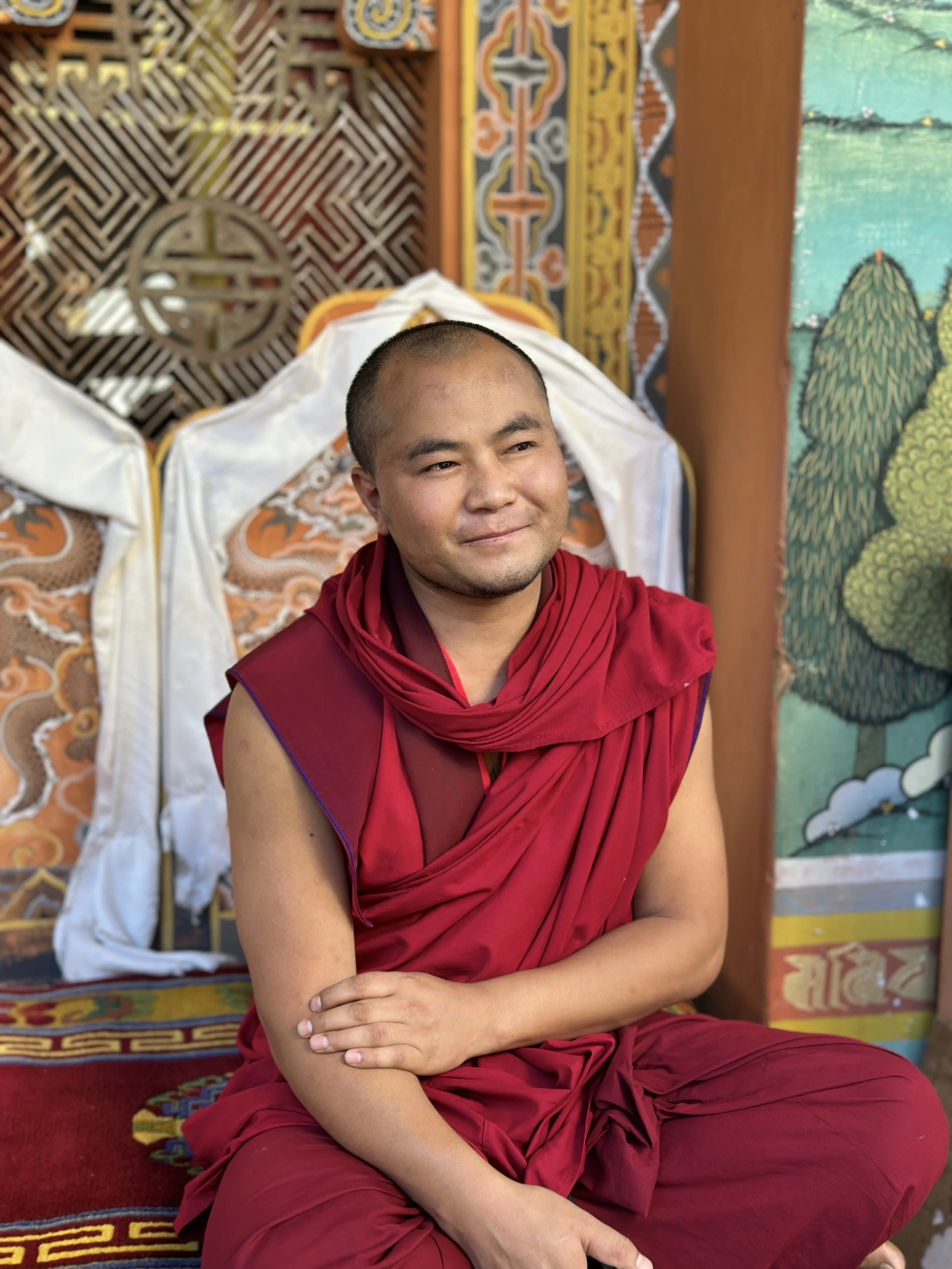
A monk at Punakha Dzong
Frequently Asked Questions About Luxury Bhutan Travel
How many days should I spend in Bhutan?
Most travellers do well with seven to eleven days. Anything shorter tends to feel rushed given how spread out the country's regions are, while eleven days, similar to my own itinerary, allows time for both Paro and Punakha, a meaningful wellness component, and the Tiger's Nest hike without feeling compressed.
What is the Sustainable Development Fee and is it included in my trip cost?
The Sustainable Development Fee is a mandatory government charge of 100 US dollars per person per night for most international visitors, funding infrastructure, education, healthcare, and conservation. It is typically billed separately from your accommodation and guiding costs, so ask your advisor to confirm exactly what is and is not bundled into your quoted package price.
Do I need a visa to visit Bhutan?
Yes, with the exception of travellers from India, Bangladesh, and the Maldives. Your tour operator arranges the visa on your behalf once your trip is booked, and you will need to supply a passport copy and a recent photo. The clearance letter generally arrives about two weeks before departure.
Can I visit Bhutan independently, without a guide?
No. Bhutan requires all international visitors to book through a licensed tour operator and be accompanied by a guide for the length of their stay. This is what makes a private tour, rather than an independent trip, the only real way to experience the country.
If a licensed operator is required, why work with a travel advisor as well?
These are two different roles. The licensed operator handles ground logistics inside Bhutan, guides, drivers, permits, and local arrangements. As your advisor, I design the journey itself, selecting properties, shaping the pacing, building in the wellness or adventure elements you actually want, and coordinating the international flights and any surrounding destinations. I then work with a vetted ground partner, in Bhutan's case Trails of Indochina, to deliver it. Most quality ground operators do not work directly with individual travellers, so this is the route to the itinerary rather than an added layer on top of it.
How do I actually get to Bhutan?
Only two airlines, Druk Air and Bhutan Airlines, fly into Paro International Airport, Bhutan's only international airport. Flights connect through a limited number of gateway cities, including Bangkok, Kathmandu, Delhi, and Singapore. I flew Druk Air from Bangkok into Paro and continued on to Kathmandu at the end of my trip, a routing that works well for North American travellers pairing Bhutan with another Asian destination.
Is the Tiger's Nest hike difficult, and what if I am not an experienced hiker?
The hike is genuinely demanding, climbing roughly 550 metres over three kilometres at altitude, but it is manageable for most reasonably fit travellers at a slower pace. A good guide will adjust timing and rest stops to your comfort level. Anyone with significant mobility or cardiac concerns should discuss the hike with their advisor before booking.
How high is Bhutan, and do I need to worry about altitude?
Bhutan sits at genuine elevation throughout, and this is one of the most underestimated aspects of planning a trip here. Paro sits at roughly 2,200 metres and Thimphu at around 2,300 metres, so you are at altitude from the moment you land. Mountain passes climb considerably higher, with Dochula at 3,050 metres and Chelela at 3,810 metres, and the meditation cliff above Gangtey where I hiked reaches 3,400 metres. Most travellers adjust well, but shortness of breath on exertion, disrupted sleep in the first few nights, and mild headaches are all common. A well designed itinerary builds in gradual acclimatization, and a good guide will pace your days accordingly.
What kind of travel insurance do I need for Bhutan?
This is something I advise every client on carefully, because standard travel insurance policies frequently exclude or limit coverage at high elevation, sometimes at thresholds as low as 2,500 or 3,000 metres. Given that a typical Bhutan itinerary regularly exceeds those elevations, and that trekking itineraries go higher still, it is essential to confirm that your policy explicitly covers activities at the altitudes you will actually reach. Just as important is emergency medical evacuation coverage. Bhutan's medical infrastructure is limited outside the main hospitals, and a serious incident on a remote trail may require helicopter evacuation followed by transfer to a facility outside the country, which is extraordinarily expensive without proper coverage. I review these details with clients as part of planning, because a policy that looks comprehensive on paper can leave real gaps once you are standing at 3,800 metres on a mountain pass.
Are there benefits to booking a Bhutan trip through a travel advisor rather than direct?
Yes, and they are more meaningful in Bhutan than in most destinations. Beyond the itinerary design and ground coordination, my Virtuoso affiliation and supplier relationships mean clients frequently receive added value at properties like the ones described in this guide, which can include room upgrades, resort or spa credits, and complimentary experiences. Just as importantly, you have someone advocating for you if a flight is delayed by weather or an arrangement needs to change while you are on the ground, which matters a great deal in a country with limited flights and remote lodges.
What is the best time of year for a luxury Bhutan trip?
October is widely considered ideal, offering clear skies and excellent hiking conditions, and it is when I travelled myself. Spring, from March through May, is a strong second choice, particularly for rhododendron blooms. Summer's monsoon rains and winter's cold at higher elevations make both seasons more challenging, though still workable with the right itinerary.
Is Bhutan a good destination for a honeymoon or milestone celebration?
Very much so. The combination of privacy, luxury properties, and genuinely once in a lifetime experiences like Tiger's Nest makes Bhutan a compelling choice for couples, and many of the wellness lodges I stayed at offer special touches for honeymooners and anniversary travellers when arranged in advance.
Can adventure activities like rafting, cycling, or trekking be added to a wellness focused itinerary?
Yes, and this is one of the most common ways I customize a Bhutan trip. River rafting on the Mo Chu, cycling through the Punakha Valley, and multi day treks such as the Druk Path can all be layered into a private itinerary alongside luxury accommodation and wellness experiences, so the trip reflects exactly the balance of relaxation and activity each client wants.
Can Bhutan be combined with other destinations in one trip?
Yes. Because Bhutan's only international flights connect through cities like Bangkok, Kathmandu, Delhi, and Singapore, it pairs naturally with a broader Asia itinerary, whether that means a few days in Nepal, a stay in Thailand, or a longer multi country journey through the region.
Ready to Plan Your Own Bhutan Travel Adventure?
If any part of this guide has stirred something in you, whether it is the pull of Tiger's Nest, the appeal of a wellness retreat unlike any other, or simply the desire for a fully private tour of one of the world's most carefully preserved kingdoms, I would love to help you build your own version of this journey. Every itinerary I design is tailored to the traveller, whether that means more time at a single wellness property, a greater focus on trekking, or a shorter introduction to the highlights.
As a six time Condé Nast Traveler Top Travel Specialist and a Virtuoso member, I travel to these destinations personally so that every recommendation I make comes from firsthand experience rather than a brochure. That access also means my clients frequently receive added value at properties like the ones described here, from room upgrades and resort credits to complimentary experiences, benefits that are not available when booking direct.
Book your complimentary travel consultation and we can begin designing your journey to the Land of Happiness.
Kindly,
Ariane
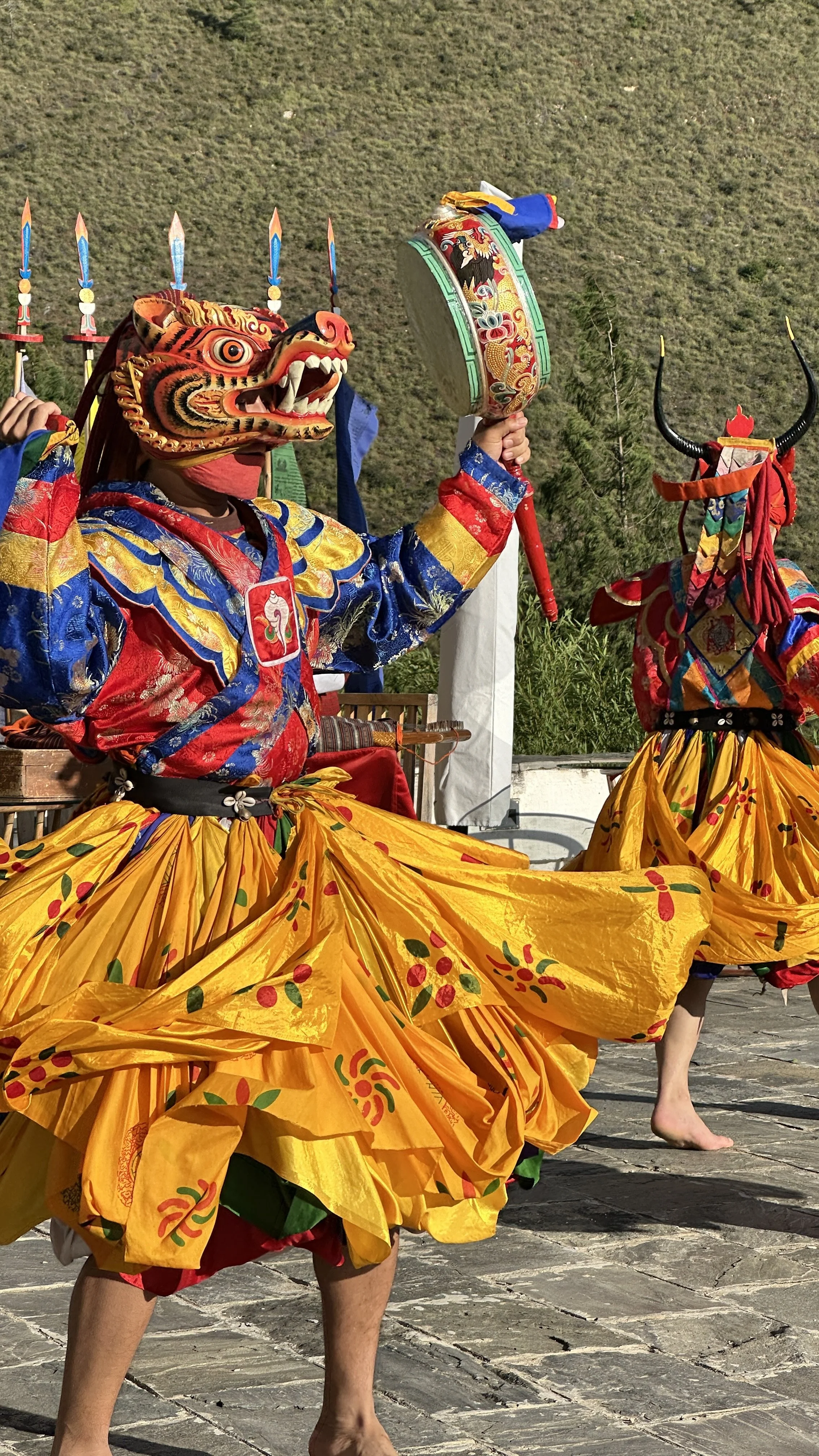
Bhutanese Cultural Mask Dance
A note on this trip: portions of this journey were hosted, meaning certain accommodations and experiences were provided to me at a reduced rate or complimentary so that I could evaluate them firsthand on behalf of my clients. Every opinion here is my own, and I recommend properties only when I would send my own clients to them. Where an experience is a paid addition rather than part of the standard rate, I have said so, because I would rather you plan with accurate expectations than be surprised by a bill.